
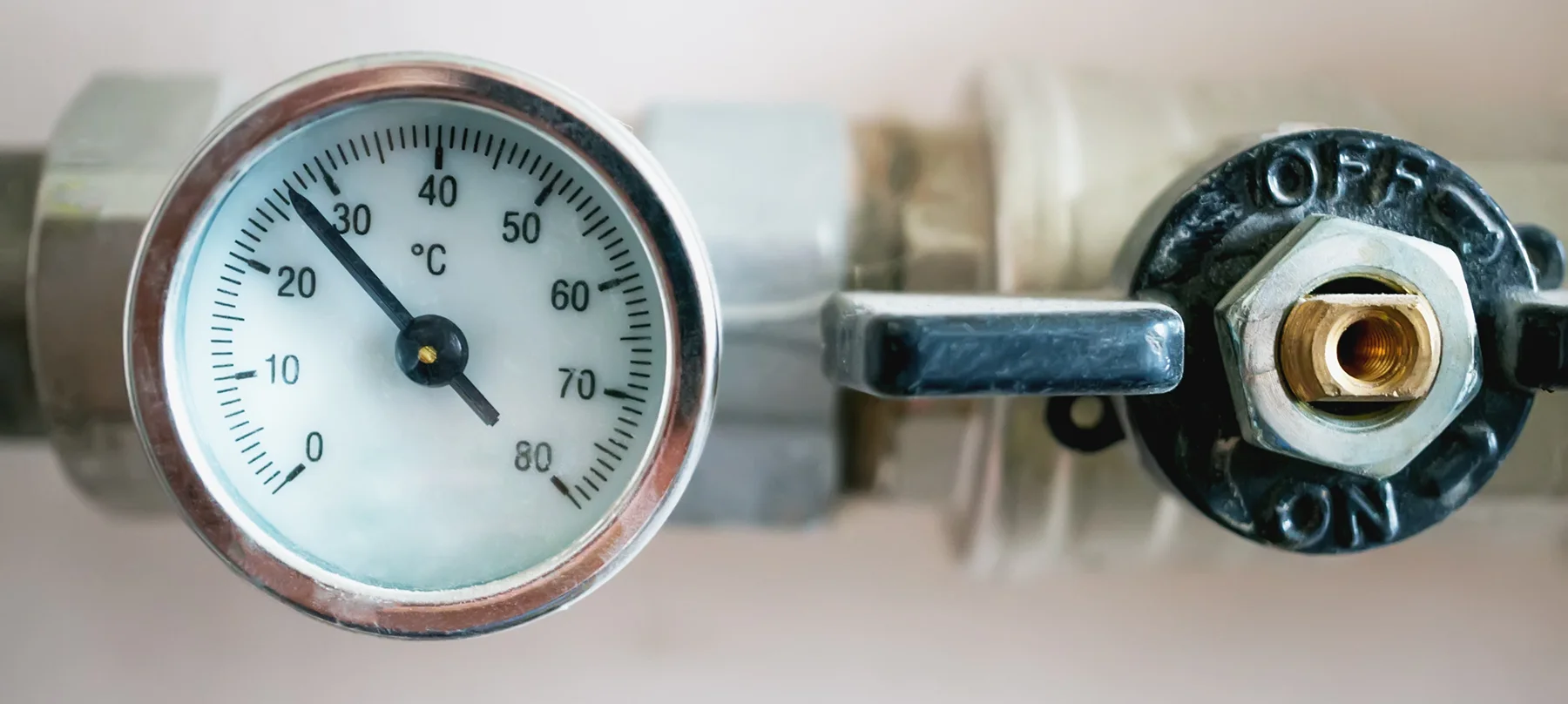
Your boiler’s pressure plays a critical role in how well your heating system works. Too high, and it could trigger safety features or leaks. Too low, and you may find yourself without heating or hot water—especially during the colder months.
In this blog, we’ll break down everything you need to know about boiler pressure: what’s normal, why it fluctuates, what the most common causes are, and how to respond safely. Whether you’ve spotted a fault code or noticed the pressure gauge sitting in the red, APH is here to help you understand—and fix—the issue.
What Is Boiler Pressure and Why Does It Matter?
Boiler pressure refers to the pressure of hot water circulating within your central heating system, not your mains water pressure. It’s measured in bars, with the ideal range for most combi and system boilers typically being between 1 and 1.5 bar when cold, and up to 2 bar when the system is running.
Proper boiler pressure ensures that:
- Hot water can flow efficiently to radiators and taps
- Your boiler operates safely and efficiently
- Your heating system avoids strain and early wear
If the pressure is too low, water can’t circulate properly. If it’s too high, the system may be under stress—risking damage or triggering safety shutdowns.
How to Check Your Boiler Pressure
Most modern boilers have a pressure gauge on the front of the unit. This gauge is usually colour-coded:
- Green zone (1–2 bar): Ideal pressure
- Red zone (low) (below 1 bar): Too little pressure
- Red zone (high) (above 2.5–3 bar): Too much pressure
If your gauge is outside the green zone, your boiler may display an error code or shut itself down as a safety precaution.
Common Causes of Low Boiler Pressure
If your boiler pressure is consistently low or drops over time, it may be due to:
1. A Leak in the System
Even small leaks from pipe joints, radiators, or towel rails can reduce pressure. Look out for:
- Damp patches on walls or floors
- Water under radiators or valves
- Rust or limescale near joints
APH can carry out a full system inspection and leak detection to pinpoint the problem.
2. Recently Bled Radiators
When you bleed your radiators to release trapped air, it also releases some water, which can drop the pressure. This is normal and easily fixed by topping up the system.
3. Faulty Pressure Relief Valve (PRV)
A PRV that’s stuck open can let water escape from the system, causing low pressure.
4. Expansion Vessel Problems
If your boiler’s expansion vessel is faulty or flat (usually due to lost air pressure), it can’t manage changes in pressure, which may lead to drops over time.
How to Fix Low Boiler Pressure
Most boilers allow you to top up the pressure using the filling loop—a flexible silver hose located under or near the boiler.
Here’s a quick guide:
- Turn off the boiler and let it cool.
- Locate the filling loop and open both valves slowly.
- Watch the gauge rise to between 1 and 1.5 bar.
- Close the valves and restart the boiler.
Important: Don’t overfill the system. If you’re unsure or the pressure drops again quickly, call APH for professional help.
Common Causes of High Boiler Pressure
Too much pressure can also lead to system faults or water leaks. High boiler pressure is usually caused by:
1. Overfilling the System
If you’ve recently topped up your boiler and let the gauge rise above 2.5–3 bar, your boiler will often respond by venting water through the PRV to protect itself.
2. Faulty Pressure Relief Valve
A stuck PRV may cause the system to remain at high pressure, unable to relieve the excess.
3. Expansion Vessel Issues
Just like with low pressure, a failed expansion vessel can’t absorb the increased volume of water when heated, which leads to pressure spikes.
4. Limescale Buildup in the Heat Exchanger
In hard water areas, scale can restrict flow and cause the boiler to overheat—resulting in elevated pressure and noisy operation.
How to Fix High Boiler Pressure
Here are some safe steps you can take:
- Turn off the boiler and allow it to cool.
- Bleed a radiator using a bleed key to release excess water and pressure.
- Check the filling loop valves are fully closed and not letting in extra water.
If the issue persists or you’re seeing consistent high pressure, do not ignore it—call APH. We’ll inspect your expansion vessel, PRV, and pressure sensors and carry out any necessary repairs.
Warning Signs to Watch For
- Boiler switches off randomly
- Gurgling, banging, or kettling noises
- Pressure gauge fluctuates widely between on/off cycles
- Error codes like E119, F22, or 118 (depending on make)
- Visible leaks from copper overflow pipe outside the building
Any of these could suggest pressure-related faults that need urgent attention.
Can Boiler Pressure Affect Heating Bills?
Yes. A system operating at the wrong pressure won’t heat efficiently. It will either overwork itself or fail to deliver adequate heat—leading to more frequent boiler cycles, higher energy use, and uneven room temperatures.
Getting your boiler pressure right keeps energy bills in check and extends the life of your boiler.
Why Choose APH to Fix Boiler Pressure Issues?
- Gas Safe Registered Engineers
- Fast Diagnosis and Same-Day Repairs
- Servicing for All Boiler Makes and Models
- Pressure Vessel and PRV Replacements
- Clear, Transparent Pricing
We don’t just adjust your pressure—we get to the root of the issue so it doesn’t come back.
Conclusion: Don’t Ignore Boiler Pressure Warnings
Boiler pressure issues are common—but also easily fixable if you catch them early. Whether your pressure is creeping too high or dropping too low, APH is here to help with expert diagnostics and fast repairs.
Get in touch today if your boiler is acting up or your heating system seems off. We’ll restore the right pressure and give your home the reliable warmth it deserves.