
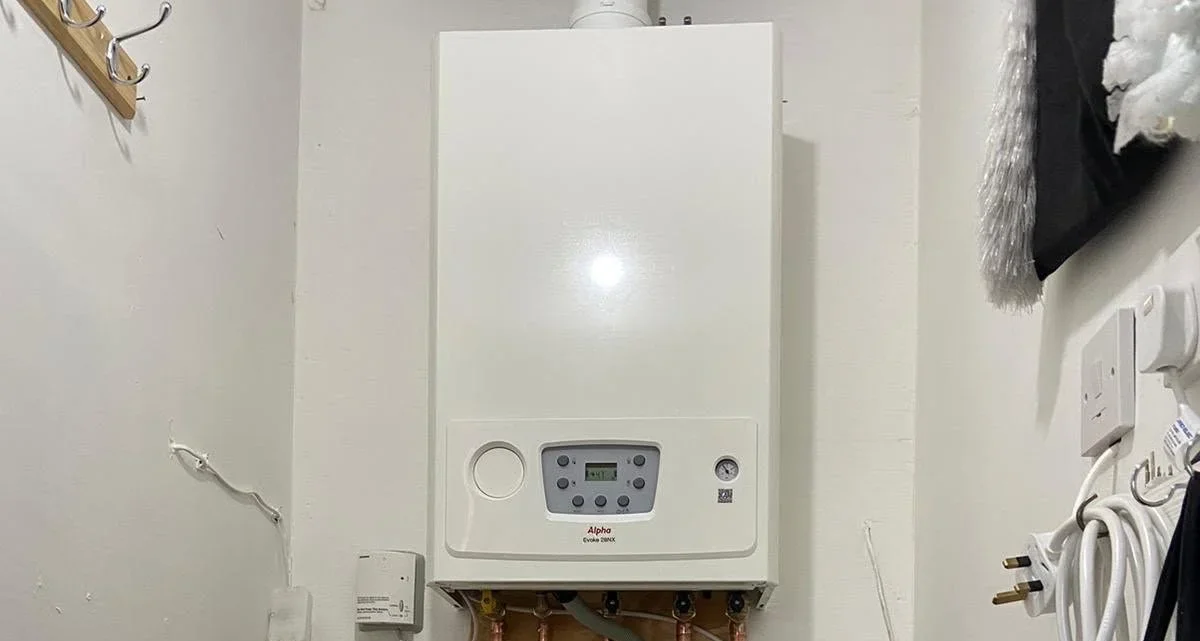
Is replacing your combi boiler better than another year of high bills?
When an ageing combi boiler starts using more energy, needs repairs, or struggles to provide consistent heating, homeowners often face a difficult choice: spend money on a replacement now or keep using the existing system for another year.
There is no universal answer. A relatively reliable boiler with a minor fault may be worth repairing, while an older system with repeated breakdowns and declining performance can become increasingly expensive to keep running.
The decision should therefore consider more than the initial replacement price. Energy consumption, repair bills, reliability, heating performance and the condition of the boiler all have a role to play.
If your boiler is becoming increasingly expensive to operate, contact APH for practical advice on whether repair or replacement is the more sensible option for your home.
What are the signs that a combi boiler may be nearing the end of its useful life?
Age alone does not determine whether a boiler needs replacing. However, several warning signs can indicate that continuing to spend money on an ageing appliance deserves closer consideration.
Look out for:
- Frequent breakdowns
- Repeated repair bills
- Unusual noises
- Inconsistent heating
- Hot water taking longer to reach the required temperature
- Radiators struggling to heat properly
- Increasing difficulty finding replacement parts
- Noticeably higher energy use
- The boiler regularly losing pressure
One problem does not automatically mean replacement is necessary. A professional assessment can help establish whether the fault is isolated or part of a wider decline in performance.
Could an older boiler be contributing to high energy bills?
It can.
Older boilers may not operate as efficiently as modern condensing models, particularly if they have developed faults or their system controls are outdated.
However, the boiler is not the only factor affecting energy consumption. Insulation, thermostat settings, property size, heating habits and energy prices all influence the final bill.
If your usage has remained broadly similar but the heating system has become noticeably less effective, it may be worth investigating whether the boiler is contributing to unnecessary energy use.
How should you compare replacement costs with future energy bills?
A useful comparison involves looking at the likely cost of keeping the existing boiler for another year against the cost of replacing it.
Consider:
| Cost or factor | Existing boiler | Replacement |
| Immediate expenditure | Repair or servicing | Installation |
| Energy efficiency | Depends on current condition | Modern condensing technology |
| Repair risk | May increase with age | Usually lower initially |
| Controls | May be outdated | Can be upgraded |
| Reliability | Depends on age and condition | New system |
| Warranty | Existing cover may be limited | New warranty subject to terms |
| Long-term planning | Less predictable | Greater certainty |
The boiler replacement cost should therefore be considered alongside likely repair expenditure and energy use.
It is impossible to predict exact savings without assessing the property and current system, so homeowners should be wary of guarantees based on generic assumptions.
When does repair make more sense?
Repair can be sensible when the boiler is otherwise reliable, and the fault is relatively straightforward.
For example, if a well-maintained boiler develops one minor issue, replacing the entire system may be unnecessary.
Repair may be more appropriate when:
- The boiler is not particularly old
- Repair costs are modest
- Replacement parts are readily available
- The system still heats the property effectively
- Energy performance remains acceptable
- There are no repeated faults
The decision should be based on the condition of the boiler rather than age alone.
When could replacement be the better option?
Replacement may become more attractive when several warning signs appear together.
For example, an ageing boiler that requires repeated repairs, performs inconsistently and appears increasingly expensive to run may no longer offer good long-term value.
A new system can provide:
- Improved efficiency
- More reliable heating
- Modern controls
- Greater certainty around maintenance
- A new manufacturer’s warranty, subject to its terms
- Better suitability for current household requirements
However, replacement is still a significant investment, so the decision should be based on the condition and needs of the individual property.
Does the boiler replacement cost include everything?
Not necessarily.
The final price can depend on the boiler selected, installation complexity, controls, pipework, system preparation and other work required.
When considering a combi boiler replacement in Chesterfield, ask for a clear quotation that explains what is included.
Check whether the price covers:
- New boiler
- Installation labour
- Removal and disposal of the old appliance
- Flue work
- Controls
- Pipework alterations
- System preparation
- Commissioning
- Warranty information
- Any potential additional charges
This makes it easier to compare quotations fairly.
APH can provide a clear explanation of the proposed replacement, including the boiler specification, installation work and factors that could affect the final price.
Could better controls make a difference without replacing the boiler?
Sometimes.
If the existing boiler is still in good condition, upgrading controls may improve the way the heating system is operated.
Programmable thermostats can help schedule heating around daily routines, while suitable smart controls can provide additional management options.
However, controls cannot solve every boiler problem. If the appliance itself is inefficient, unreliable, or repeatedly breaking down, replacing the controls alone may only address part of the issue.
An assessment can help determine whether control improvements are sufficient or whether a complete upgrade should be considered.
What should you consider before choosing a replacement combi boiler?
The replacement should be matched to the property.
The installer should consider:
- Heating requirements
- Hot water demand
- Property size and layout
- Number of bathrooms
- Existing radiators
- Pipework condition
- Heating controls
- Available installation space
- Household usage patterns
The highest-output boiler is not automatically the best choice. Correct sizing can help provide appropriate performance without unnecessary expenditure.
A typical Chesterfield household decision
Imagine a three-bedroom semi-detached home with a combi boiler that has been installed for many years. It still operates, but the homeowners have paid for several repairs recently and notice that heating performance is less consistent.
They obtain an assessment rather than immediately committing to replacement. The installer finds that the boiler is ageing and several components are becoming more problematic.
The homeowners compare the likely cost of another year of repairs and uncertain performance with a new installation. They decide that replacement provides greater long-term certainty.
The important factor is not simply that the boiler is old. It is the combination of repair history, performance, running costs and future reliability.
Is waiting another year always a mistake?
No.
If the existing boiler remains reliable and efficient enough for the household, delaying replacement may be entirely reasonable.
However, waiting can become less attractive when repairs are becoming frequent, or the system is increasingly difficult to maintain.
It can also be useful to plan replacement before a complete breakdown. Emergency replacement can leave homeowners with fewer opportunities to compare specifications and quotations.
A planned installation generally provides more time to research the options and decide what is appropriate.
How can you make a sensible replacement decision?
Start with the facts rather than assumptions.
Review:
- Boiler age and condition
- Recent repair costs
- Heating performance
- Energy usage
- Control system
- Expected future maintenance
- Available replacement budget
- Installation quotations
Then compare the likely short-term and long-term implications.
There is no need to replace a boiler simply because it has reached a certain age. Equally, repeatedly repairing a failing system without considering replacement may not provide good value.
If you are unsure whether to keep repairing your existing combi boiler or plan a replacement, speak to APH for an assessment based on your property’s heating needs.
Frequently Asked Questions
Is it cheaper to repair or replace a combi boiler?
It depends on the fault, boiler age and condition. A minor repair can be cheaper than replacement, while repeated faults and rising repair costs may make replacement more sensible.
How do I know when my combi boiler needs replacing?
Frequent breakdowns, increasing repair costs, poor heating performance and rising energy use can all indicate that replacement is worth considering.
Will a new combi boiler reduce energy bills?
It may improve efficiency compared with an older boiler, but actual savings depend on property characteristics, heating habits, controls and energy prices.
Does replacing a boiler increase home value?
A modern heating system may be viewed positively by buyers, but the impact on property value varies and should not be assumed.
Should I wait until my boiler breaks down?
Not necessarily. Planning replacement before a complete failure gives you more time to compare options and arrange suitable installation work.
Does boiler replacement include new controls?
It depends on the quotation. Always check which controls are included and whether upgrades are optional.
Thinking About Replacing Your Combi Boiler?
Deciding whether to replace a combi boiler or continue paying for an ageing system requires a broader view than the initial price. Repair costs, energy consumption, reliability and future maintenance can all influence the decision.
For homeowners considering combi boiler replacement in Chesterfield, a planned assessment can help establish whether replacement is genuinely worthwhile or whether the existing system can continue operating effectively.
APH can provide practical guidance based on the condition of your current boiler and the requirements of your home, helping you make a measured decision rather than reacting to an unexpected breakdown.