
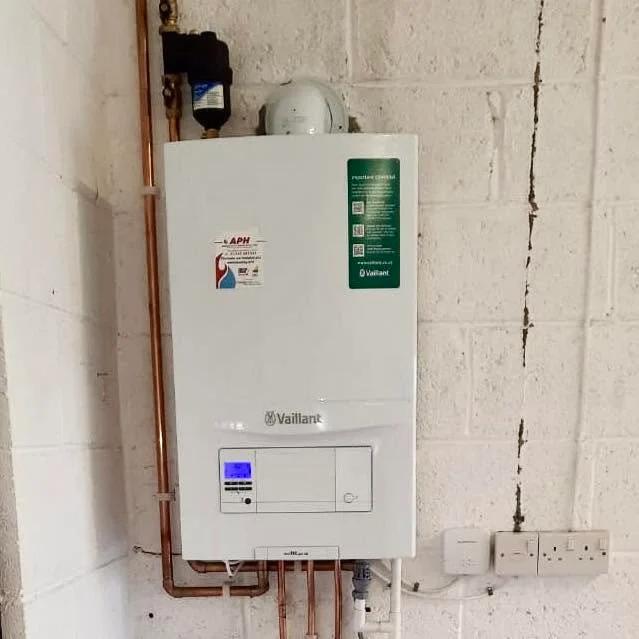
Replacing an old boiler does not always mean removing one appliance and connecting another to exactly the same pipes. Heating systems can remain in place for many years, often with changes and repairs carried out along the way. By the time a replacement is needed, the surrounding pipework may no longer suit a modern boiler perfectly.
This does not automatically mean that a complete heating system needs replacing. In many cases, existing pipework can remain while specific sections are adapted or replaced. The important step is understanding the condition and layout of the system before the new boiler is fitted.
For homeowners considering the cost of a new boiler installation, pipework alterations are one of the practical factors worth discussing during the initial survey.
Why might old pipework need changing?
Existing pipework can sometimes be retained, but an installer needs to assess whether it is suitable for the replacement system.
Possible reasons for alterations include:
- Pipework has deteriorated over time
- Connections do not match the new boiler
- Previous alterations have created awkward routes
- Pipe sizes are unsuitable for the proposed arrangement
- There are redundant sections
- The boiler is being moved
- Existing gas pipework requires modification
- Condensate drainage needs a new route
The extent of the work depends on the property. A small alteration may be all that is required, while a more substantial change could be sensible if several sections are unsuitable.
If you are concerned about old pipework, contact APH before the replacement begins. Our team can assess the existing system and explain which sections may need attention.
Can existing heating pipework be reused with a new boiler?
Often, yes. There is no universal rule that all existing heating pipework must be replaced when a boiler is upgraded.
The installer should consider its condition, configuration and suitability for the new appliance. If the pipework is sound and compatible, retaining it can avoid unnecessary disruption.
However, the new boiler may have different connection positions from the old appliance. This can mean that even a suitable system needs short sections altered to make the final connections.
A professional assessment should distinguish between pipework that can reasonably be retained and sections where replacement would improve the installation.
Does gas pipework need particular attention?
Gas pipework is an important part of the installation and needs to be suitable for the boiler being fitted.
If the existing gas supply arrangement is inadequate for the new appliance, modifications may be required. The installer will assess the installation and ensure the completed system meets the applicable requirements.
This is particularly important when replacing an older boiler with a newer appliance that has different requirements.
Homeowners should not assume that the gas pipe connected to the old boiler will automatically be suitable for the replacement.
What happens when boiler connections do not match?
Modern boilers can have different connection layouts, even when replacing an appliance of a similar type.
This does not necessarily create a major problem. An installer can often adapt existing connections using appropriate components and new sections of pipework.
The key is to create a neat, secure and serviceable installation rather than forcing old connections into a position that does not suit the replacement.
Potential alterations may involve:
- Heating flow and return connections.
- Hot and cold water connections.
- Gas supply connections.
- Condensate drainage.
- Pressure relief arrangements.
- Controls and associated wiring.
The amount of work required should be discussed before installation where it can reasonably be identified.
Can old pipework cause problems after the new boiler is installed?
Potentially. A new boiler can expose weaknesses elsewhere in an older heating system.
Existing pipes may contain corrosion, deposits or previous repair points. This does not mean the new boiler has caused the problem, but changes in the system can sometimes reveal issues that were less noticeable previously.
This is why the installer should consider the wider heating system rather than concentrating only on the appliance.
If problems are identified, the homeowner should be told what has been found and what remedial work is recommended.
How can pipework alterations affect the final price?
Pipework changes require materials and labour, so they can influence the total project cost.
A short modification may have a relatively small impact. More extensive alterations can take longer, particularly where access is restricted, or several connections need to be changed.
The cost for new boiler installation therefore depends partly on how closely the existing system matches the proposed replacement.
| Pipework situation | Potential installation impact |
| Sound, compatible pipework | Limited alterations may be needed |
| Different boiler connections | Short adaptation sections may be required |
| Poorly routed pipework | Rerouting may improve the installation |
| Deteriorated sections | Replacement may be recommended |
| Boiler relocation | More extensive pipework changes may be needed |
| Unsuitable gas supply | Gas pipework alterations may be required |
These are general considerations rather than fixed rules. Every property needs to be assessed individually.
What if the boiler is being moved?
Moving a boiler is one of the situations most likely to increase the amount of pipework work involved.
A new location may require longer heating and water connections, a different gas route, revised condensate drainage and a new flue arrangement.
There may also be changes to the controls and electrical supply.
Relocation can still be worthwhile. Homeowners sometimes move boilers to improve access, create storage space or change the layout of a kitchen or utility area.
However, the complete installation should be considered before deciding whether the move represents good value.
Does condensate pipework need changing too?
It may. A replacement condensing boiler needs a suitable route for condensate drainage.
If the boiler remains in the same location, the existing route may be adaptable. If the appliance is moved, the condensate route will probably need to be reconsidered.
External condensate pipes can be vulnerable to freezing during cold weather, so the installer should look for a practical and suitably protected route.
This is another example of a small installation detail that can influence both the work required and the long-term reliability of the system.
How should homeowners compare pipework allowances?
When reviewing quotations, look for clear descriptions of what pipework work is included.
A quotation may state that “standard pipework alterations” are included, but this can leave questions about what happens if more extensive changes are discovered.
Useful questions include:
- Which existing pipes are expected to remain?
- Are gas pipe alterations included?
- Are heating connections included?
- Is condensate rerouting included?
- What happens if unsuitable pipework is found?
- Will additional work require approval before it is completed?
Clear answers can make the cost of new gas boiler installation easier to understand.
If a quotation leaves pipework requirements unclear, speak to APH before accepting it. Understanding the likely alterations can help you compare installation proposals on a fairer basis.
A typical Chesterfield example
Imagine a homeowner replacing a boiler that has been in place for many years. The appliance is located in a kitchen cupboard, with several visible pipework modifications from previous repairs.
The replacement boiler can remain in the same position. During the assessment, the installer finds that most of the heating pipework can be retained, but several connections need adapting, and a short section of gas pipework needs attention.
The homeowner therefore does not need a complete repipe. Instead, targeted alterations create suitable connections for the new appliance.
This type of approach can minimise unnecessary disruption while still producing a properly planned installation.
What should happen before pipework is altered?
The installer should assess the existing system and identify the changes required for the proposed boiler.
Where possible, the homeowner should know about significant alterations before work begins. If unexpected issues appear once the old boiler is removed, the installer should explain the problem and discuss the available options.
Good communication is particularly important when additional work could affect the original quotation.
The aim should be to make necessary changes without replacing sound components simply for the sake of doing so.
Frequently Asked Questions
Does every new boiler need new pipework?
No. Suitable existing pipework may be retained if it is in appropriate condition and compatible with the new installation.
Why might old pipework need altering?
Different boiler connections, unsuitable routes, deterioration, boiler relocation or gas supply requirements can all lead to pipework alterations.
Does moving a boiler increase installation costs?
It can. Relocation often requires additional gas, heating, water and condensate pipework, along with possible flue and electrical changes.
Can old gas pipework be reused?
It depends on the existing arrangement and the requirements of the replacement appliance. It should be assessed by a suitably qualified installer.
What affects the cost of new gas boiler installation?
The boiler itself, installation location, flue, pipework, condensate drainage, controls, access and any required alterations can all influence the final cost.
Get a Bespoke Boiler Installation Quote
Old pipework does not automatically mean that a heating system needs a complete overhaul. In many properties, a careful assessment can identify which sections are suitable to retain and which need adapting or replacing.
Understanding these requirements before installation begins can make the cost of a new boiler installation easier to assess and can reduce uncertainty during the project.
If your existing boiler and pipework are several years old, APH can assess the system before recommending a replacement. Contact our team for practical advice and a bespoke quotation based on the work your property actually requires.