
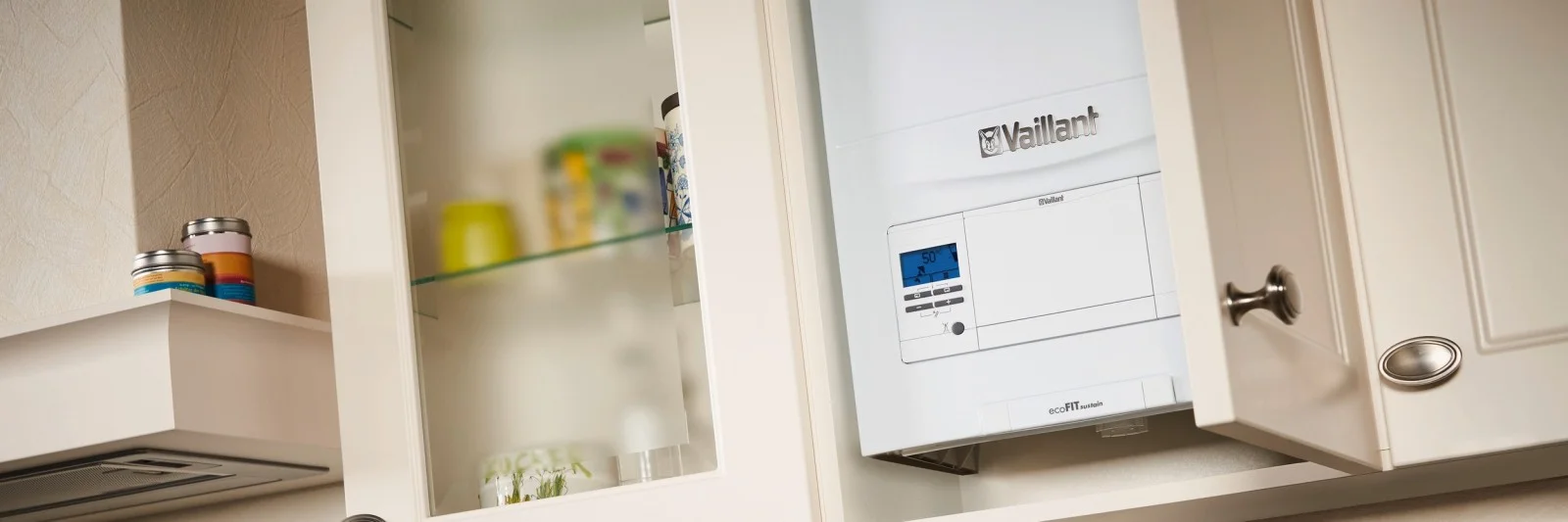
Finding the right new boiler can feel overwhelming. How do you know which is the best condensing boiler for your home? To make your decision easier, we’ve put together this guide to explain the most efficient type of boiler on the market today.
Heating our homes efficiently is crucial, and condensing boilers are specifically designed to heat your home and water as efficiently as possible. Since 2005, it has been a requirement for every newly fitted gas-fired boiler to be condensing, and they must have an efficiency ‘A’ rating too.
So, what is a condensing boiler, and how does it compare to other options? This guide will walk you through the process and explain why they are both eco-friendly and cost-effective for your home and the environment.
What is a Condensing Boiler?
A condensing boiler runs on gas or oil and is engineered to maximise energy efficiency. It achieves this by converting water vapour condensation into heat, recovering some of the lost heat from waste gases. The primary difference between a condensing boiler and a non-condensing boiler is the amount of usable heat it generates, allowing condensing boilers to reach over 90% energy efficiency.
How Does a Condensing Boiler Work?
Your boiler will use either gas or oil as fuel. Once lit, the burner heats the system, sending hot gases through a primary heat exchanger where the heat is absorbed and directed to your radiators.
What sets condensing boilers apart is the secondary condensing area, which allows the warm air to condense, creating water droplets that are then collected and safely drained away. This process increases efficiency, as other boilers don’t recover as much heat.
Condensing boilers recycle heat more effectively than older models, where the heat leaving the flue could be over 200°C. With a newer condensing model, this is reduced to around 55°C, boosting the system’s efficiency.
How Can I Tell If My Boiler is a Condensing Model?
If you’re unsure whether your boiler is condensing, here are a few things to check:
- Installation Date: If your boiler was installed after April 2005, it will be a condensing boiler due to regulatory requirements.
- Flue Type: Non-condensing boilers typically have metal flues for excess gases, whereas condensing models have plastic flues that go through an external wall or roof.
- Steam and Drainpipe: If you notice steam coming from the flue and a white plastic pipe leading to a drain, you likely have a condensing boiler.
If your boiler is more than 10 years old and is not condensing, upgrading to a newer, more efficient model will ensure your home stays safe and warm.
Does a Condensing Boiler Need a Drain?
Yes, all modern condensing boilers require a drain to safely dispose of the waste condensation produced during operation. This works in tandem with the external flue, releasing waste gas as steam.
What’s the Difference Between a Combi Boiler and a Condensing Boiler?
It’s essential to note that all combi boilers manufactured today are also condensing boilers, but not all condensing boilers are combi boilers.
- Combi Boilers: These combine heating and hot water, eliminating the need for a separate cylinder or tank. They’re ideal for smaller homes with one or two bathrooms and are quick to install.
- Condensing Boilers: These feature a secondary condensing heat exchanger for improved efficiency. While standard (non-condensing) boilers use a similar primary heat exchanger, they do not recover as much heat, making condensing boilers the better option.
What Temperature Should a Condensing Boiler Be Set At?
To ensure optimal efficiency, it’s crucial to set your condensing boiler at the right temperature. The ideal central heating temperature is around 70°C, while hot water should be set to approximately 60°C.
What Are the Benefits of a Condensing Boiler?
Condensing boilers come with many advantages over older systems. With an efficiency rate of over 90%, these boilers offer significant savings on energy bills and are better for the environment. Here are just some of the benefits:
- Lower Energy Bills: Thanks to energy-efficient operation, your energy costs will be reduced.
- Wireless Programming: Many models offer wireless control for easy use. They can sense air temperature and adjust heating automatically.
- Space-Saving: These compact boilers can be tucked away easily and don’t take up much room.
- Reduced Carbon Footprint: The high efficiency of condensing boilers significantly lowers your carbon footprint.
Are Condensing Boilers Safe and Reliable?
Condensing boilers are rigorously tested to ensure safety and reliability. They’re sealed for heat insulation, preventing anything from being sucked into the boiler. Additionally, all toxic gases and substances are safely expelled through the external flue and drainage system.
Contrary to some myths, condensing boilers are just as reliable as traditional models, if not more so. Their efficiency remains high throughout their operational life.
What is a Condensing Boiler?
A smart, energy-efficient way to heat your home and water. With every new boiler being condensing since 2005, it’s worth considering an upgrade if you’re still using an older system. The efficiency, environmental benefits, and savings make condensing boilers a great choice for modern homes.
Ready to upgrade your boiler?
Get in touch with Advanced Plumbing and Heating today to explore the best A-rated condensing boilers for your home. Call us now at 01246 551 537 to learn more about our services and find the perfect boiler for your needs!