
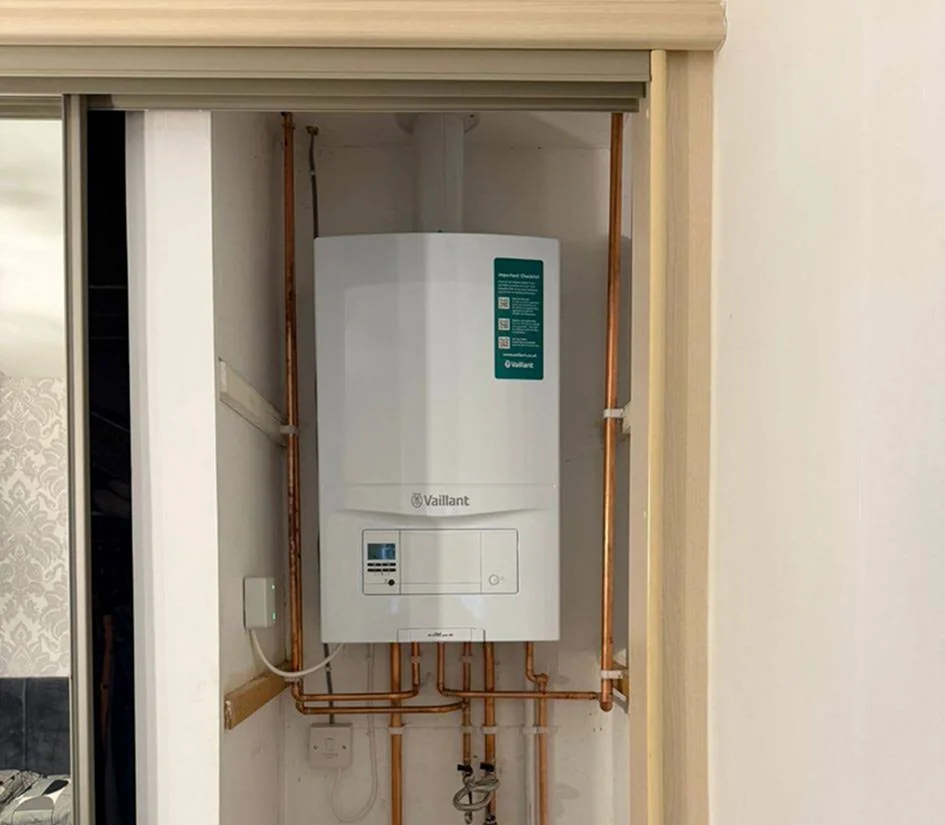
A boiler can be an excellent choice on paper, yet the quality of the installation around it can make a major difference to how well it performs in everyday use. The boiler itself is only one part of the finished heating system. Its flue, condensate pipe, gas pipework, heating connections and drainage all need to be planned correctly.
For homeowners arranging a new system, these details can sometimes be overlooked because they are less visible than the boiler sitting on the wall. However, careful planning during boiler installation Chesterfield projects can help avoid unnecessary alterations, poor drainage and problems that may affect the system later.
If you are planning a new boiler, it is worth discussing the full installation rather than simply choosing a boiler model. Contact the APH team for practical guidance on what your property may require.
Why do flue position and condensate routing matter?
The flue removes combustion gases from the boiler and must be positioned so those gases can safely discharge outside. The condensate pipe, meanwhile, carries acidic condensation produced during normal operation to a suitable drain or discharge point.
Both components need careful consideration because their routes are influenced by the property’s layout.
Important factors can include:
- The position of the boiler within the property
- The location of suitable external walls
- The position of windows, doors and other openings
- The route available for condensate drainage
- The location of existing waste pipes or drainage
- Access for installation and future maintenance
- The construction and condition of the walls
A suitable route may be straightforward in one house but considerably more involved in another. A boiler fitted in a kitchen, utility room or airing cupboard can each present different practical considerations.
What should be considered when positioning a boiler flue?
Flue placement is not simply a matter of drilling through the nearest external wall. The terminal needs to be positioned in accordance with applicable installation requirements, taking account of nearby openings, boundaries and other features.
A professional installer will assess the proposed flue route before installation begins. This helps determine whether the boiler can remain in the preferred location or whether an alternative position would provide a more practical solution.
The flue also needs to be installed correctly through the wall, with appropriate components and support. Poor workmanship around the flue can create problems that are difficult to identify once surrounding finishes have been completed.
For homeowners comparing options for boiler installation in Chesterfield, asking how the flue will be routed is a useful part of understanding what is actually included in the work.
How is a condensate pipe routed correctly?
A modern condensing boiler produces condensate as part of its normal operation. This liquid needs to be discharged safely and reliably.
Where possible, condensate pipework should be routed internally before passing outside. External sections can be more vulnerable to freezing during prolonged cold weather, particularly where the pipe is exposed or inadequately sized and protected.
The installer may consider:
| Installation detail | Why it matters |
| Pipe route | Determines how reliably condensate can reach the drain |
| Pipe gradient | Helps condensate flow away from the boiler |
| External exposure | Can increase the risk of freezing |
| Drain connection | Needs to provide a suitable discharge route |
| Pipe support | Prevents movement and poor falls |
| Accessibility | Makes future inspection and maintenance easier |
The exact arrangement depends on the property and the existing drainage available. A good installation considers the route before the boiler is mounted rather than treating condensate disposal as an afterthought.
Can existing pipework affect a new boiler installation?
Yes. Existing pipework can influence both the practical work involved and the final layout.
Older heating systems may have pipework that is smaller, poorly positioned or unsuitable for the new arrangement. In other cases, the existing pipes may be perfectly usable but require minor alterations to connect the replacement boiler.
The installer should assess the condition and configuration of relevant pipework as part of the installation process. This is particularly important when replacing an older boiler with a modern condensing model.
If you are unsure whether your existing pipework can be retained, speak to the APH team before work begins. A proper assessment can help identify potential alterations early and make the quotation easier to understand.
What installation details can affect boiler performance?
Small details can have a noticeable effect on how a heating system operates.
For example, poor condensate drainage may increase the risk of blockages or freezing. Incorrectly planned pipework can make servicing more difficult. An unsuitable flue arrangement may create compliance and safety concerns. Even the position of isolation valves and connections can influence how straightforward future maintenance will be.
A competent boiler fitter Chesterfield homeowners use should therefore look beyond the appliance itself and consider the complete installation.
Good installation practice generally involves:
- Assessing the proposed boiler location.
- Planning the flue route before drilling or fitting.
- Identifying an appropriate condensate discharge point.
- Checking existing gas, heating and water pipework.
- Considering access for servicing.
- Completing and checking all connections before commissioning.
The objective is not simply to get the boiler working on installation day. The finished system should be practical to operate, maintain and service.
What happens when the ideal boiler location is not the easiest installation route?
The preferred boiler position may not always provide the simplest route for every connection. A homeowner may want the boiler in a particular cupboard, for example, while the most convenient drainage point is elsewhere.
This does not automatically mean the preferred location is unsuitable. It means the installation needs proper planning.
An experienced installer can assess possible routes and explain where additional work may be necessary. In some homes, a slightly different pipe route may provide a neater and more reliable result. In others, moving the boiler position may reduce unnecessary alterations.
A boiler fitter Chesterfield homeowners choose should be able to explain these decisions clearly rather than leaving the homeowner to discover them once installation has started.
A typical Chesterfield installation scenario
Consider a typical semi-detached property where an older boiler is being replaced with a modern combi boiler. The existing appliance may be positioned close to an external wall, but its replacement requires a revised flue arrangement and a new condensate route.
During the survey, the installer identifies that the most direct external condensate route would leave a section of pipe exposed to winter temperatures. Instead, the route is assessed for a more protected connection to suitable internal drainage.
This type of planning illustrates why installation surveys matter. The boiler may be straightforward to replace, but the surrounding details determine how cleanly and reliably the completed system works.
What should homeowners ask before approving an installation?
A quotation becomes much easier to compare when it explains the installation work rather than listing only the boiler model.
Useful questions include:
- Where will the flue be positioned?
- How will the condensate pipe reach the drain?
- Will any external condensate pipework be required?
- Can the existing heating pipework be reused?
- Are additional alterations included?
- Will redundant pipework be removed?
- Is making good included where required?
- Will the completed system be tested and commissioned?
These questions can help identify differences between apparently similar quotations.
Why does careful installation planning matter long after the boiler is fitted?
A boiler is expected to operate reliably for many years, so installation decisions should be considered with the future in mind.
Accessible pipework and sensible component positioning can make servicing easier. A well-planned condensate route can reduce exposure to freezing conditions. Correct flue positioning supports safe operation and helps ensure the installation meets the relevant requirements.
This is why boiler installation Chesterfield homeowners arrange should be approached as a complete heating project rather than simply an appliance replacement.
Frequently Asked Questions
Does every new boiler need a condensate pipe?
Modern condensing boilers normally produce condensate that must be discharged through an appropriate drainage arrangement. The exact route depends on the boiler location and the property’s existing drainage.
Can a condensate pipe run outside?
External condensate pipework can be used where appropriate, but it needs to be correctly installed and protected against freezing. An installer should assess whether an internal route or another suitable arrangement is preferable.
Does the flue have to go straight through the wall?
Not necessarily. Depending on the boiler and property, different approved flue configurations may be possible. The route must meet the manufacturer’s requirements and applicable installation regulations.
Can old heating pipework be reused?
Sometimes. Its condition, size, configuration and compatibility with the new system should be assessed before deciding whether it can remain in place.
What does a boiler fitter do during the installation?
A boiler fitter Chesterfield homeowners appoint will typically consider the boiler position, flue, pipework, condensate drainage, connections and commissioning requirements as part of the overall installation.
Let’s Plan Your New Boiler Installation
A successful boiler installation depends on much more than choosing the right appliance. Flue positioning, condensate routing, drainage, pipework and access for future servicing all contribute to the finished result.
Taking time to assess these details before work begins can help prevent avoidable complications and make the installation more practical for the property.
If you are considering replacing your boiler, APH can assess the existing layout and explain the installation requirements clearly. Contact our team to discuss your property and request a bespoke quote based on the work involved.