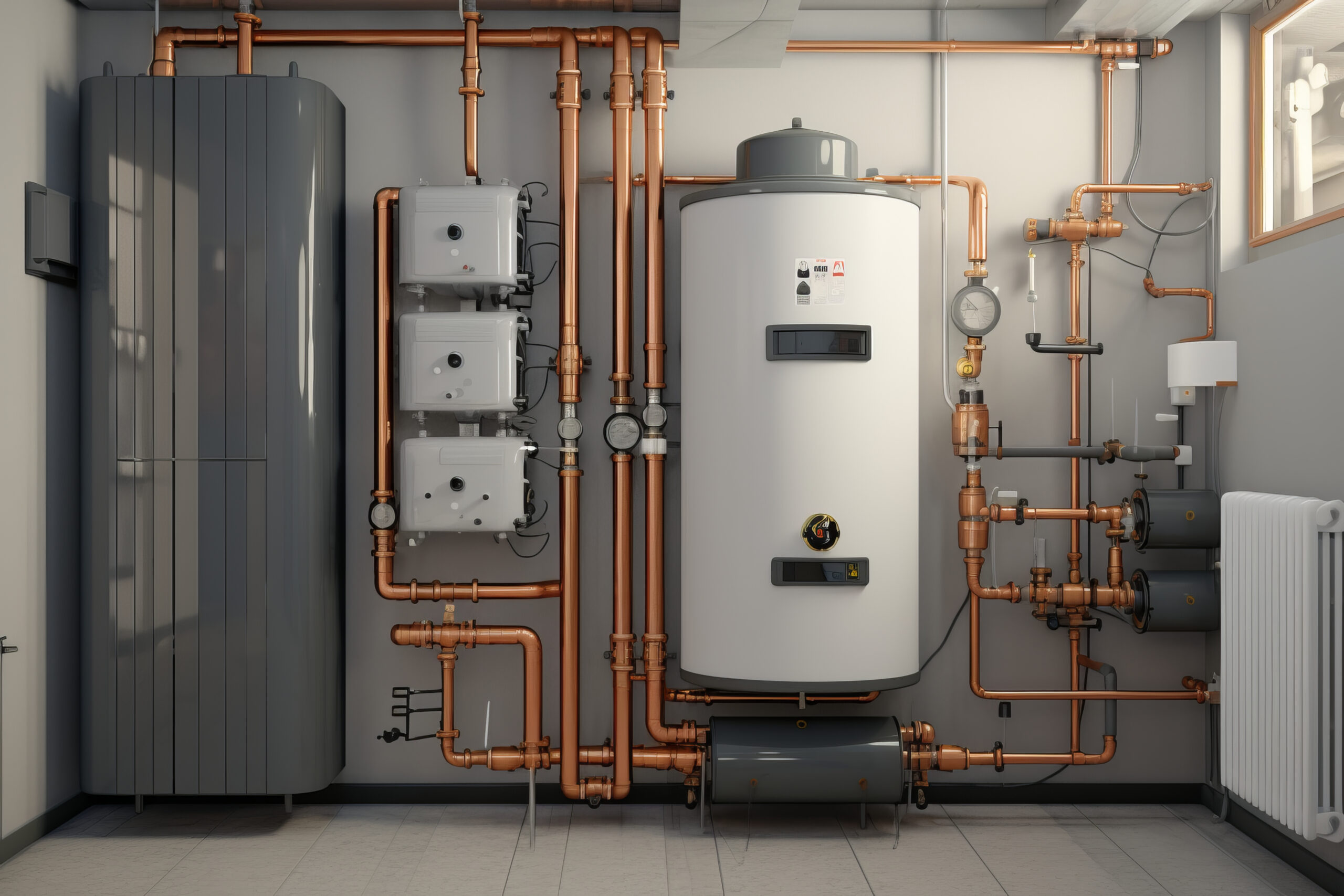
Immersion heaters are commonly found in properties across the country, suitable for both small apartments and larger homes. But what exactly are they?
In this article, we’ll take a closer look at immersion heaters, explaining how they function, their advantages and disadvantages, and how they compare to gas boilers.
First, let’s explore how immersion heaters work…
How Do Immersion Heaters Work?
Immersion heaters heat water using a metal element inside a hot water cylinder. In simple terms, it’s like a large kettle, with an electric resistance heater (a metal loop or coil) warming the surrounding water.
Typically, immersion heaters are connected to the electricity supply through a switch, allowing you to turn them on and off as needed. They can also be fitted with timers, enabling you to automate when they heat water.
Which Homes Use Immersion Heaters?
Immersion heaters are used in various homes, from small flats to larger properties with multiple bathrooms. In smaller homes that lack a gas supply, immersion heaters heat water stored in a hot water cylinder using the mains electricity.
In larger properties with higher demand for hot water, immersion heaters can serve as a backup if your boiler breaks down.
Additionally, immersion heaters are commonly used in homes with non-traditional heating systems, such as heat pumps, making them a good solution for heating water in those setups.
Are Immersion Heaters Energy-Efficient?
Since immersion heaters run solely on electricity and do not use gas, they produce no exhaust fumes during the heating process. This makes them more energy-efficient than traditional gas boilers.
You can also install timers and thermostatic controls on your immersion heater. These features help reduce energy waste by heating only the water you need and giving you greater control over the temperature.
Another way to improve energy efficiency is by adding an insulating ‘jacket’ to your hot water cylinder, enhancing heat retention.
However, if you’re thinking about replacing your combi boiler with an immersion heater, consider the following:
Combi boilers provide hot water on demand, eliminating the need to store heated water.
Fresh hot water from a combi boiler reduces the risk of bacteria buildup.
Gas is generally cheaper than electricity.
How Much Does an Immersion Heater Cost to Run?
According to research, most immersion heaters consume 3kW of electricity per hour. With the January 2024 energy price cap set at £0.29 per kWh, the cost of running an immersion heater is £0.87 per hour.
For example, a 3kW, 180-litre immersion heater running two full heating cycles per day (morning and evening) would typically take about 3 hours to heat the water. Over the course of a day, it would run for about 6 hours.
6 x £0.87 = £5.22
It’s important to note that this is an estimate, and actual costs will depend on factors like:
The size of the tank
How much water you use
The temperature you heat the water to
How well your hot water tank is insulated
When the heater is scheduled to run (off-peak electricity tariffs may make it cheaper to run the heater at night)
If you have temperature sensors to turn the heater off once the water reaches the desired temperature
Additionally, if your immersion heater is connected to a solar panel system, you may be able to heat water without relying on the National Grid, making it a more cost-effective option. However, you will need to consider the installation cost of solar panels.
How to Maximise the Efficiency of Your Immersion Heater
To ensure you always have hot water when you need it without wasting energy, you should:
Insulate your hot water tank to improve heat retention using foam tubing around pipes and an immersion heater blanket around the cylinder.
Use a thermostatic control to automatically turn off the heater once it reaches the desired temperature.
Set a timer to turn the heater on and off when needed. If you’re on an Economy 7 energy tariff, you can schedule the heater to operate during off-peak hours.
Reduce the temperature if the water is hotter than necessary (a minimum of 50ºC is required to kill bacteria).
What Are the Pros and Cons of Immersion Heaters?
If you’re considering an immersion heater, or comparing it to traditional central heating systems, it’s helpful to know the pros and cons.
Pros of Immersion Heaters:
Provide hot water even if your central heating boiler breaks down.
Insulated cylinders can keep water warm when the heater is off.
If you’re on an Economy 7 tariff, you can set the heater to come on during cheaper off-peak hours.
Can be used with renewable energy sources like solar panels.
Simple to operate with just an on/off switch and basic thermostat controls.
Cons of Immersion Heaters:
Only use electricity, which is generally more expensive than gas.
Must heat water to at least 50°C to eliminate bacteria.
Without a thermostatic control and timer, immersion heaters can be expensive to run.
Cannot supply radiators.
Do not provide hot water on demand like a combi boiler.
Heating small amounts of water can be time-consuming.
Even with insulation, water in the tank can cool down quickly.
Immersion Heaters vs Gas Boilers: Which Should You Choose?
While immersion heaters can be a useful option—especially as a backup if your central heating boiler breaks down—they are not as efficient or versatile as gas boilers. Immersion heaters work separately from the heating system, meaning they can’t heat radiators or provide hot water on demand like a combi boiler can. For many, they are a complementary solution rather than a replacement for a gas boiler.
For more information on installing or upgrading your heating system, get in touch with Advanced Plumbing and Heating today!
tank, isolation tank, sensory deprivation, steel, stainless steel, ultrasound, phased array, ultrasonic testing, research, pain, hydrotherapy, disease, turbine, immersion, laboratory, inspection, sleep, medical device, equipment, physical therapy, stress, price, sensor, remote control, heat, type 2 diabetes, valve, motion, stimulation, engine, pressure, autoclave, transmission, corrosion, welding, thermometer, ulcerative colitis, interoception, modular design, electronics, antidepressant, anxiolytic, acupuncture, calibration, weight, list price, pipe, autopsy, motion control, mood, hypertension, brain, muscle, nutrition, crystal healing, energy, surgical, medical office cabinets, flotation, medical, vitamin, weight loss, ozone therapy, stimulus, cart, peer review, liquid, water heating, electric heating, watt, flange, heating element, thermostat, oil, diesel fuel, heat transfer, density, fluid, screw, boiler, viscosity, storage tank, titanium, incoloy, metal, solution, freezing, fuel oil, temperature control, copper, heating system, voltage, petroleum, pump, tank heaters, heating, cartridge, cartridge heater, wire, cooling tower, thermocouple, acid, phase, alloy, construction, duct, ceramic, water purification, reservoir, solvent, natural gas, convection heater, silicone rubber, convection, volt, power rating, joule heating, infrared, thermowell, nema connector, efficient energy use, wax, chemical industry, electric current, petroleum industry, sodium hydroxide, silicone, water treatment, submersible water heater, immersion tank heater, immersion water heater for bathtub, immersion pool heater, immersion water heater near me, rinnai v75, immersion tanks, immersion electric water heater, immersion water heater home depot, immersion water heater with thermostat, immersion water heater, portable immersion water heater, flange heater, diameter, renewable energy, carbon, contactor, kettle, water heater rod, immersion rod
Frequently Asked Questions
Can a sous vide immersion heater heat up a spa?
A sous vide immersion heater is not suitable for heating a spa. These devices are designed for precise cooking temperatures in smaller volumes of water, not for the larger, higher temperature demands of a spa.
Will immersion heater heat jacuzzi?
An immersion heater can heat a jacuzzi, but its efficiency depends on the heater's capacity and the jacuzzi's size. It's generally more effective for smaller bodies of water and may take longer to achieve the desired temperature.
Are immersion heaters electric?
Immersion heaters are electric devices designed to heat water. They operate by using electrical resistance to warm the water directly within a tank, making them a popular choice for domestic heating systems.
Should I leave my immersion heater on all the time?
Leaving your immersion heater on all the time is not advisable. Doing so can lead to higher energy costs and increase the risk of overheating, making it more efficient to use the heater only when needed.
Are immersion tanks expensive to run?
Immersion tanks can be costly to run, primarily due to their reliance on electricity, which is typically more expensive than gas. However, their operational cost varies based on energy tariffs and usage patterns.
Are electric immersion heaters expensive to run?
Electric immersion heaters can be expensive to run, especially if used frequently, as they rely entirely on electricity for heating water. However, their actual cost depends on electricity prices and usage habits.
What are the disadvantages of immersion heaters?
The disadvantages of immersion heaters include higher electricity costs compared to gas boilers, longer heating times, and potential inefficiency in larger households. They may also require additional insulation to maximise energy use effectively.
Do immersion heaters use a lot of electricity?
Immersion heaters can use a significant amount of electricity, especially when heating large volumes of water. Their overall energy consumption depends on usage patterns and the heating duration, so efficiency can vary.
Are immersion heaters efficient?
Immersion heaters are generally efficient for heating water, especially when used with off-peak electricity tariffs. However, their overall energy efficiency can vary based on usage patterns and the efficiency of the electricity supply system.
Are immersion heaters gas or electric?
Immersion heaters are electric. They use electricity to heat water in a tank, providing a convenient and efficient heating option compared to gas boilers.
Are immersion heaters dangerous?
Immersion heaters can be safe when properly installed and maintained. However, risks such as electrical faults or improper usage can pose dangers, so it's essential to follow safety guidelines and consult professionals for installation and maintenance.
Are immersion heater expensive?
Immersion heaters can be relatively cost-effective compared to gas boilers, but the overall expense depends on usage and energy rates. While initial purchase costs are low, running costs may vary based on energy efficiency and local electricity prices.
Can I put immersion tank in loft?
Placing an immersion tank in the loft is possible, but it requires proper insulation and positioning to prevent freezing and ensure safe operation. Always consult a professional to assess feasibility and compliance with regulations.
What does an immersion heater do?
An immersion heater is a device that heats water directly in a hot water tank using electric elements. It is commonly used for domestic hot water supply, providing an efficient way to ensure a constant supply of heated water.
Can immersion heater be used in plastic bucket?
Immersion heaters can be used in plastic buckets, but it's essential to ensure the bucket is appropriate for high temperatures and can safely contain hot water without melting or deforming. Always follow safety guidelines when using electrical appliances with plastic.
Can I disconnect the immersion tank from the boiler?
You can disconnect the immersion tank from the boiler, but it's essential to consult with a professional to ensure proper safety measures and to evaluate the impact on your heating system's efficiency and functionality.
Are radiators heated by the boiler of immersion tank?
Radiators are not heated by the boiler of an immersion tank. Instead, immersion heaters directly heat water within the tank, which can then be used for taps or baths, but they do not circulate heat through radiators like traditional boilers.
Can I fit a immersion tank to a combi boiler?
Fitting an immersion tank to a combi boiler is not generally advisable, as combi boilers are designed to provide instant hot water without the need for a storage tank.
Can I remove a conventional boiler and leave the immersion tank working?
You can remove a conventional boiler and continue using the immersion tank for hot water, as immersion heaters operate independently. However, ensure your electrical system can handle the immersion heater's power requirements and consult a professional for safety and efficiency.
Can immersion heater be left on?
Leaving an immersion heater on continuously is not recommended. It can lead to higher energy costs and may cause overheating, resulting in damage. Instead, consider using a timer or thermostat to manage operation effectively.
Can my water tank switch to immersion?
Your water tank can switch to immersion heating, provided it's compatible with the system. Consult a professional to ensure proper installation and assess any necessary modifications to optimise efficiency.
Can immersion heater heat radiators?
Immersion heaters can heat water for radiators, but they are not designed for direct radiator heating. Instead, they typically heat water in a tank, which can then be circulated through a radiator system.
What size immersion heater do I need?
The size of the immersion heater you need depends on your hot water requirements and the size of your water tank. Typically, a 3kW heater is suitable for larger tanks, while a 1.5kW option works well for smaller tanks.
How long does an immersion heater take?
The time an immersion heater takes to heat water depends on its wattage and the volume of water. Typically, it can take anywhere from 30 minutes to several hours to heat a full tank.
Can immersion heaters be thermostatically controlled?
Immersion heaters can indeed be thermostatically controlled. This feature allows users to maintain desired water temperatures efficiently, preventing overheating and conserving energy.
Are there maintenance tips for immersion heaters?
Maintenance tips for immersion heaters include regularly checking the thermostat and temperature settings, inspecting for any signs of corrosion, and flushing the tank annually to remove sediment build-up. Additionally, consider professional servicing to ensure optimal performance.
What happens if an immersion heater malfunctions?
If an immersion heater malfunctions, it can result in insufficient heating, failure to heat water, or even potential safety hazards such as electrical issues. It's important to have it assessed and repaired by a qualified professional promptly.
How do immersion heaters compare to gas options?
Immersion heaters and gas options differ primarily in efficiency and installation. While gas systems can heat water faster and are generally more cost-effective for large households, immersion heaters offer flexibility, often using renewable energy sources and operating independently of a gas supply.
Can I combine an immersion heater with solar energy?
Combining an immersion heater with solar energy is possible. Solar panels can generate electricity to power the immersion heater, making it an efficient and eco-friendly way to heat water while reducing energy costs.
What is the lifespan of an immersion heater?
The lifespan of an immersion heater typically ranges from 5 to 10 years, depending on usage, maintenance, and water quality. Regular checks and timely replacements can help ensure optimal performance throughout its life.
immersion tank, immersion water heater, what is an immersion heater, immersion boiler, small immersion heater, electric immersion heater